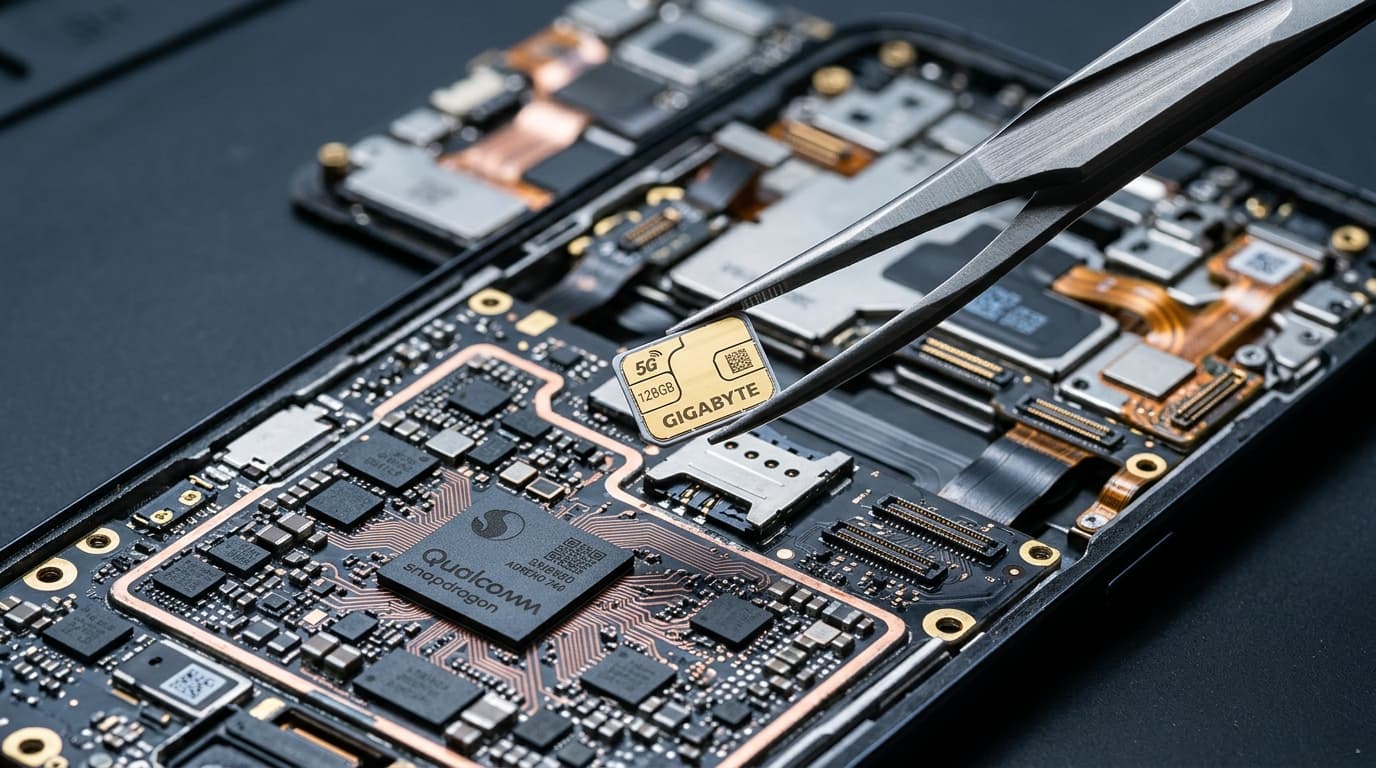
For more than thirty years, the tiny plastic Subscriber Identity Module—universally known as the SIM card—has been the physical passport of mobile telecommunications. From the credit-card-sized original SIMs of 1991 down to the modern thumbnail-sized nano-SIM, changing your mobile carrier or upgrading to a new handset always involved hunting for an elusive paperclip or SIM ejector pin, popping open a delicate metal tray, and carefully swapping a fragile piece of gold-plated plastic.
That physical ritual is rapidly fading into technological history. With Apple completely eliminating physical SIM trays in US iPhones and major Android manufacturers (including Samsung and Google) transitioning their flagship lines toward eSIM-first designs, the telecommunications industry has arrived at a pivotal inflection point. But what does the death of the plastic SIM card mean for real-world battery life, device theft recovery, and international vacation connectivity?
Under the Hood: How an Embedded SIM Operates
An eSIM (embedded SIM) is not a digital software simulation; it is a microscopic, tamper-resistant integrated circuit (eUICC) soldered directly onto the smartphone's logic board at the factory. Measuring barely 5mm x 6mm, it occupies a tiny fraction of the space required by a physical nano-SIM tray assembly.
Instead of having a carrier's unique network authentication keys permanently hardwired into the plastic card during manufacturing, an eSIM is reprogrammable over the air (OTA). Scanning a QR code or confirming a push notification downloads an encrypted carrier profile directly into the secure chip, authenticating your phone with the cellular network in seconds.
Comprehensive Comparison: eSIM vs Physical Nano-SIM
| Feature / Dimension | Physical Nano-SIM Card | Embedded eSIM | Winner |
|---|---|---|---|
| Theft & Loss Protection | Vulnerable: Thieves immediately eject the card to kill tracking | Immune: Cannot be physically removed; phone stays trackable | eSIM (Massive Security Advantage) |
| Phone Internal Space & Ingress | Bulky tray mechanism, rubber gasket wear, water leak point | Zero chassis opening; superior IP68 water/dust sealing | eSIM (Hardware Durability) |
| International Roaming Convenience | Must visit airport kiosks, wait in lines, swap small plastic cards | Instant QR code activation before landing from phone apps (Airalo / Nomad) | eSIM (Modern Travel Ease) |
| Battery Life Impact | Standard modem power consumption | Identical modem power consumption (Zero perceptible difference) | Tie (Neutral) |
| Emergency Device Transfer | Effortless: Swap card into any backup phone in 10 seconds | Requires cellular/Wi-Fi connection to download profile to new phone | Physical SIM (Legacy Simplicity) |
The Theft Deterrence Triumph: Why Thieves Hate eSIM
The single most impactful consumer benefit of eSIM is crime deterrence. Under the old paradigm, when a thief snatched an iPhone or Android device, their immediate muscle-memory reaction was to slide open the SIM tray and discard the plastic card. This instantly cut cellular data access, preventing the victim from using Apple's 'Find My' or Google's 'Find My Device' networks to track or remotely wipe the stolen handset.
With eSIM, the cellular connection cannot be physically pulled out of the chassis. Even if the thief powers the device down, modern phones continue broadcasting encrypted ultra-wideband location beacons over cellular and Bluetooth mesh networks, making stolen devices nearly impossible to conceal or resell.
International Travel Revolution: Bypassing Airport Kiosks
Traveling internationally used to involve a frustrating rite of passage: landing in Tokyo, London, or Dubai after a fifteen-hour flight, standing in an exhausting line at an airport telecom counter, showing your passport, paying inflated tourist rates, and taping your tiny domestic SIM card inside your passport cover hoping not to lose it.
With modern travel eSIM marketplaces (such as Airalo, Nomad, and Saily), you can browse data packages for over 200 countries while sitting in your departure terminal. You purchase a 10GB local data pack for $15, scan the QR code to install the profile, and leave the line turned off. The moment your plane touches down on foreign tarmac, you simply toggle on your travel eSIM in settings and connect to local 5G networks instantly, while keeping your domestic phone line active for banking SMS codes.
The One Lingering Inconvenience: The Broken Phone Scenario
The only scenario where physical SIM cards still hold an advantage is unexpected hardware catastrophe. If you drop your phone and completely shatter the display panel into blackness, you cannot navigate menus to transfer an eSIM profile to a backup device; you must contact your carrier's customer service or visit a retail branch to re-issue an eSIM QR code. On a physical phone, you simply pop the plastic tray out and drop it into a ten-year-old backup phone.