For decades, quantum computing has hovered in the popular imagination somewhere between incomprehensible theoretical physics and science fiction. Tech headlines routinely proclaim that quantum supercomputers will 'break all modern internet security' or 'solve problems in three seconds that would take classical supercomputers ten thousand years'. Yet, if you ask the average technology enthusiast how a quantum machine actually calculates an answer, you are usually met with glazed eyes and vague references to parallel universes.
The reality of quantum computing is both more grounded and far more profound than standard hyperbole suggests. Quantum machines are not simply 'super-fast gaming PCs' that will eventually run Grand Theft Auto at a million frames per second. They are fundamentally different mathematical machines designed to solve a very specific category of combinatorial optimization problems that classical binary computers will never be able to compute before the heat death of the universe.
Bits vs Qubits: The Coin Spin Metaphor
Every computer you have ever used—from the Apollo guidance computer to your smartphone—operates on the binary bit. A bit is a microscopic physical transistor that acts like a light switch: it is either OFF (0) or ON (1). Every email you write, image you capture, and video you stream is encoded into endless sequences of these binary states.
A quantum computer replaces the binary bit with the quantum bit, or qubit. A qubit can be an isolated subatomic electron, a trapped ion, or a microscopic superconducting electrical circuit chilled to nearly absolute zero (-273.15°C). Qubits harness two peculiar properties of quantum mechanics:
- Superposition: Imagine a copper coin resting flat on a table. It shows either Heads (1) or Tails (0). That is a classical bit. Now spin that coin rapidly on its edge across the desk. While it is spinning, is it Heads or Tails? In a mathematical sense, it is in a continuous probability blur of both simultaneously. That is superposition. A qubit can exist in a superposition of states until measured.
- Entanglement: When two qubits become entangled, the quantum state of one instantly dictates the state of the other, regardless of how far apart they are separated. If you change the state of one qubit, its entangled partner updates instantaneously.
The computational consequence is exponential scaling. If you have two classical bits, they can represent one of four possible combinations at any given instant (00, 01, 10, or 11). Two qubits in superposition, however, can represent all four states simultaneously. Fifty qubits can hold over one quadrillion values simultaneously. A system with just three hundred fully entangled, fault-tolerant qubits could store more numbers simultaneously than there are atoms in the observable universe.
Why You Will Never Own a Personal Quantum Laptop
One of the most persistent misconceptions is that quantum processors will eventually shrink down into consumer laptops and smartphones. They won't, and there is zero scientific reason for them to do so.
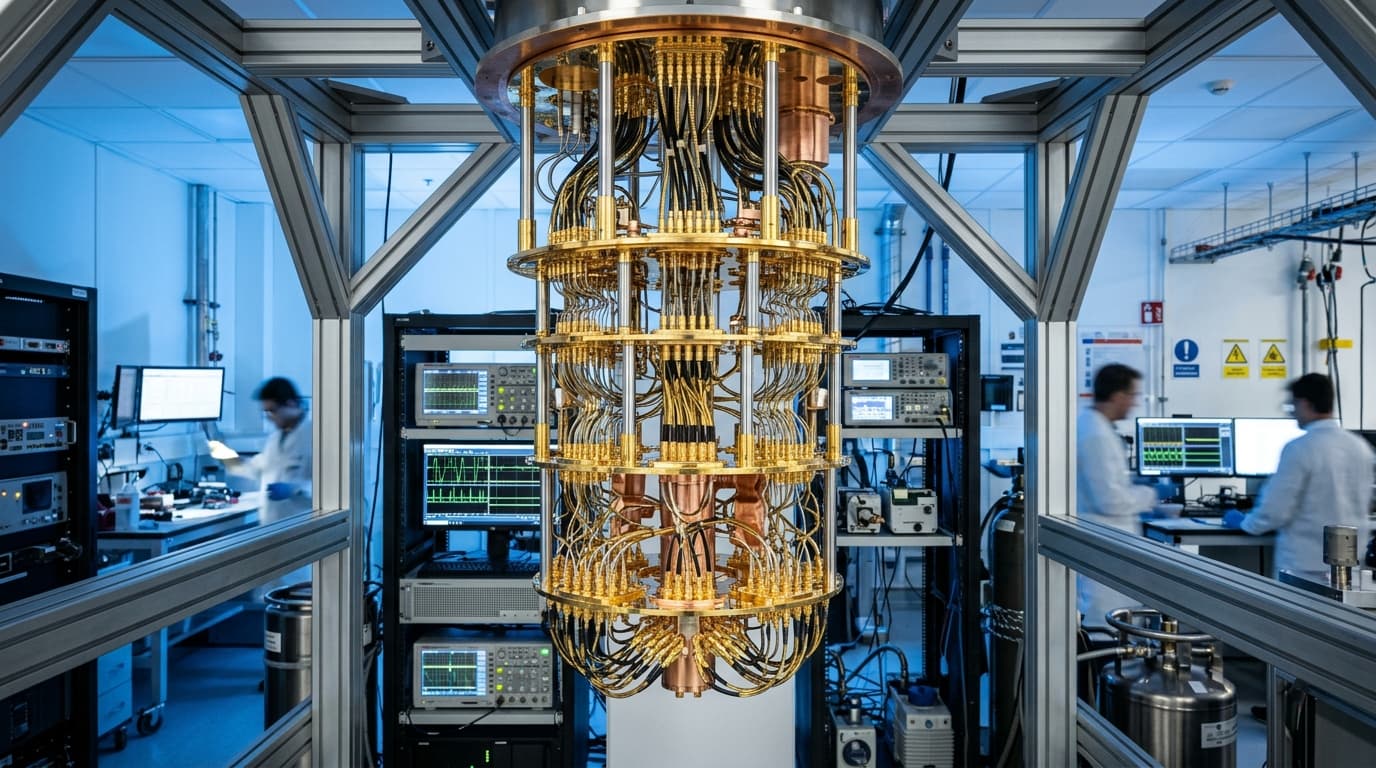
First, quantum systems require exotic cryogenic dilution refrigerators cooled with liquid helium to fifteen millikelvins (colder than deep interstellar space) to shield fragile qubits from ambient electromagnetic noise and thermal vibration. A single stray cosmic ray or warm thermal air molecule causes 'decoherence', collapsing the quantum calculation into random noise.
Second, quantum computers are actually terribly inefficient at everyday sequential computing tasks: streaming 4K video, rendering web browser text, running word processors, or managing operating system file systems. Classical silicon CPUs are vastly superior at those jobs.
The Real-World Revolution: Where Quantum Computing Changes Life
Quantum computing's true genius lies in simulating nature at the molecular level:
- Accelerated Pharmaceutical Drug Discovery: To develop a cancer drug, scientists must calculate how complex protein molecules fold and bind to receptor cells. Simulating a single 50-atom molecule requires simulating quantum interactions that overwhelm the world's fastest classical supercomputers. Quantum processors simulate quantum chemistry natively, compressing decade-long drug trials into weeks.
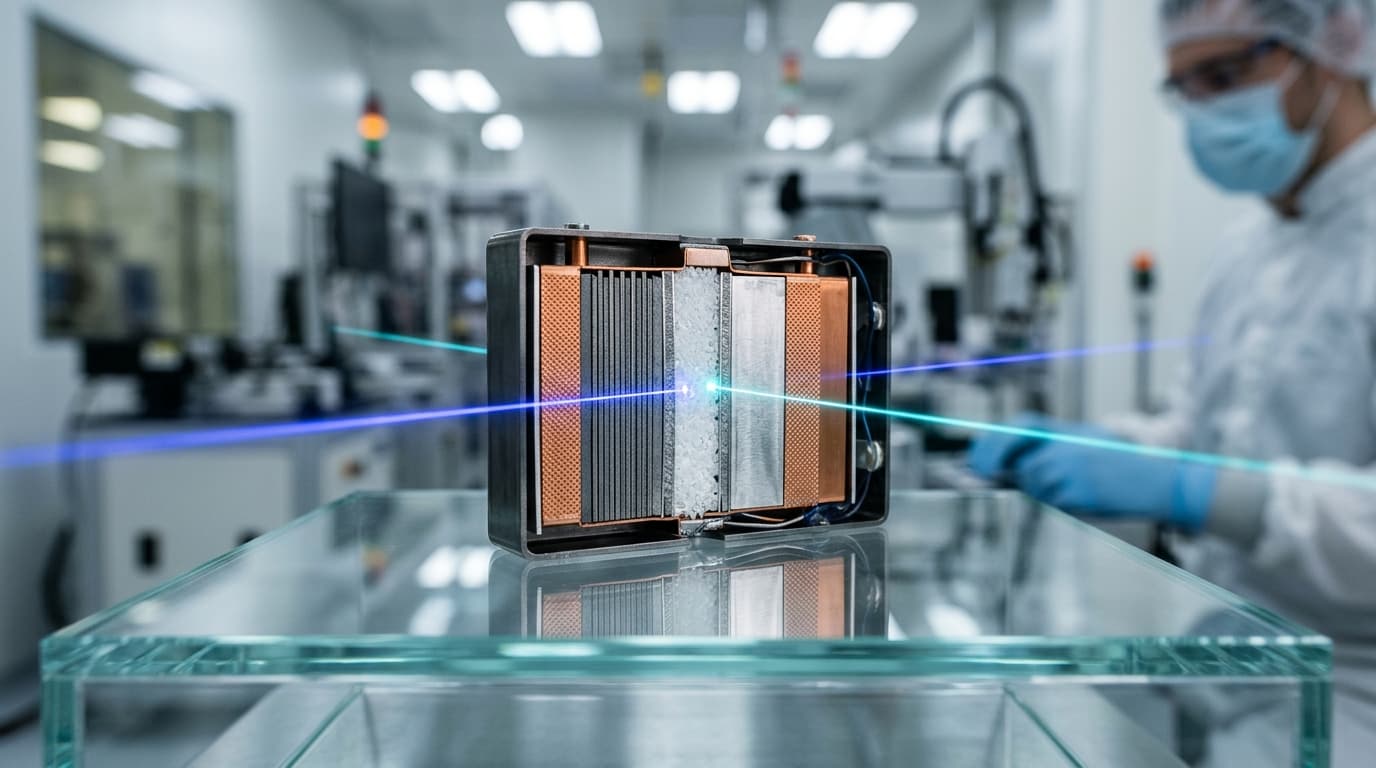
- Next-Generation Solid-State Battery Chemistry: Finding the ideal solid electrolyte material currently requires years of laboratory trial-and-error synthesis. Quantum computers can simulate thousands of lithium-metal interfacial crystalline reactions simultaneously, identifying optimal battery compounds without mixing a single chemical beaker.
- Global Supply Chain and Maritime Logistics: Optimizing the maritime routes, container distribution, and fueling stops for thousands of global cargo ships involves calculating more mathematical permutations than seconds in human history. Quantum annealing algorithms solve complex traveling salesperson problems in seconds.
- Post-Quantum Cryptography (PQC): Because quantum algorithms (specifically Shor's Algorithm) can theoretically factor large prime numbers that underpin RSA and ECC internet encryption, the global financial system is currently transitioning to lattice-based post-quantum cryptography standards developed by NIST.
Quantum computers will not replace classical computers; they will work alongside them. In the coming decade, classical cloud data centers will dispatch specialized mathematical subroutines to quantum cryo-chambers, receiving optimized solutions back into conventional software.