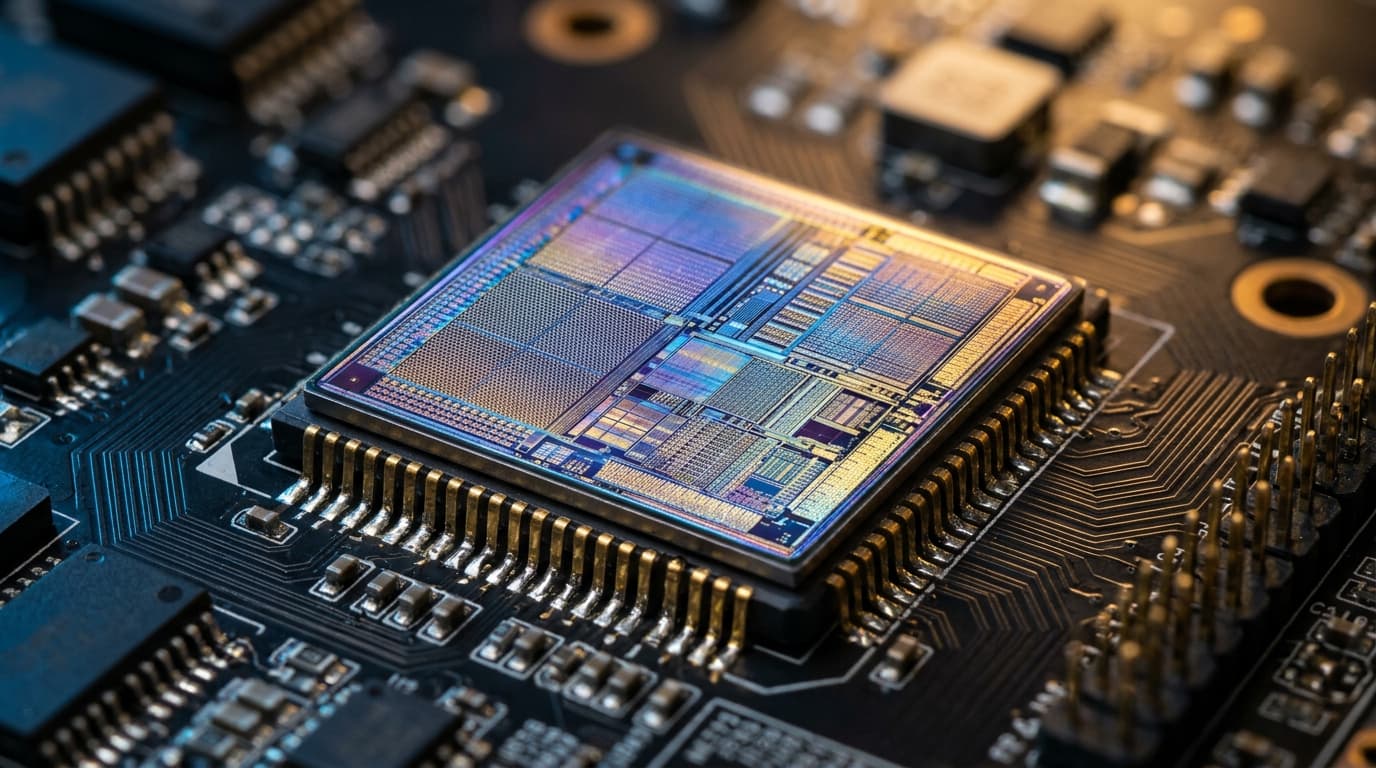
Flip through any flagship smartphone launch or laptop spec sheet today and you will hear breathless boasts about Neural Processing Units (NPUs) rated at 40 to 80 TOPS (Trillions of Operations Per Second). Marketing copy implies your pocket device now holds a self-contained supercomputer ready to summarize contracts, edit raw photos, and draft replies without sending a single byte across the internet.
Turn on Airplane Mode, however, and reality splits cleanly down the middle. Compact foundation models and real-time media filters really do sprint locally on-chip with zero cloud ping—while complex multi-step reasoning, deep coding refactors, and live web synthesis still depend heavily on data-center GPUs. Knowing where that boundary sits helps you safeguard privacy and choose hardware wisely.
Where Each AI Workload Runs Today
| Everyday AI Task | Execution Location | Typical Offline Speed | Why It Runs There |
|---|---|---|---|
| Voice-to-Text Dictation & Live Captions | 100% On-Device (Phone / Laptop NPU) | Instant (< 100ms) | Compact Whisper/acoustic models fit easily in ~1 GB RAM |
| Photo Object Removal & Portrait Bokeh | Mostly On-Device (Some complex fills cloud) | 1–3 seconds | Specialized vision diffusion models use NPU matrix units |
| Short Email Proofreading & Tone Rewrite | On-Device (2B–4B parameter LLMs) | Fast (~25–45 tokens/sec) | Small quantized models run well inside 8–16 GB unified memory |
| Local Private Document Q&A (LM Studio / Ollama) | 100% On-Device (Laptop GPU/NPU) | 15–50 tokens/sec (7B–14B) | Zero external data leakage; bounded by laptop RAM bandwidth |
| Deep Research, Multi-File Coding & Video Gen | Cloud Data Center GPUs | Seconds to minutes | Frontier 70B–400B+ models demand vast VRAM & memory bandwidth |
Why Memory Bandwidth Matters More Than NPU Marketing Numbers
When shopping for a laptop to run local AI tools offline, buyers often obsess over TOPS ratings on paper while ignoring unified memory capacity and bandwidth. Large Language Models (LLMs) are relentlessly memory-bound: every generated word requires reading billions of model weights from RAM into compute cores. A laptop with 16 GB total RAM leaves barely 6 to 8 GB usable for an offline model after Windows or macOS takes its share—capping you comfortably around 7-billion to 8-billion parameter models.
Three Big Wins of Running AI Strictly On-Device
- True Zero-Leakage Privacy: Medical notes, legal contracts, payroll spreadsheets, and personal diaries never touch remote training servers or logging pipelines.
- Zero Recurring Per-Token Fees: Once you buy a capable 24 GB or 32 GB laptop, querying local Llama, Gemma, Qwen, or Mistral models runs free forever.
- Airplane & Rural Reliability: Summarize PDF reports, translate travel phrases, and transcribe voice memos cleanly at 35,000 feet with Wi-Fi switched completely off.
Hardware Buying Rule: If you seriously plan to run private local AI models offline on a laptop over the next three years, prioritize 24 GB or 32 GB of fast unified RAM ahead of a slightly faster CPU tier.
The Hybrid Future: Smart Routing Between Local and Cloud
Rather than an all-or-nothing battle, modern operating systems increasingly embrace hybrid routing. Lightweight intent classification, calendar lookups, and private notification sorting happen instantaneously on your phone's local silicon in milliseconds, escalating only heavy multi-document synthesis to encrypted cloud servers—and telling you transparently whenever traffic leaves your device.
Real-World Local Tools You Can Test Right Now
You do not have to wait for future operating system updates to verify how fast offline AI feels on your desk today. Installing LM Studio or Ollama on Windows or macOS takes under five minutes and lets you download open-weight 7B or 14B models straight onto your SSD, switch off Wi-Fi completely, and query private folders, codebases, or tax PDFs locally without creating accounts or uploading sensitive files.
Meanwhile, Apple Silicon owners can experiment with localized transcription via MacWhisper, and Android users on flagship Snapdragon processors can run pocket-sized offline assistants directly inside MLC Chat or PocketPal—proving firsthand both where local AI already shines and where massive cloud models keep a decisive reasoning edge.